Humanitarian diplomacy
What is humanitarian diplomacy?
Humanitarian diplomacy is the use of diplomatic and political instruments to promote respect for international humanitarian law and its progressive development, facilitate humanitarian missions, and raise awareness of the importance of the humanitarian agenda.

The Luma Cuma Guaminá Project: Empowering Indigenous Lenca Women and Rural Women. Indigenous and rural women and youth have revitalized their economy by diversifying their livelihoods. Photo: © Miguel Lizana / AECID.
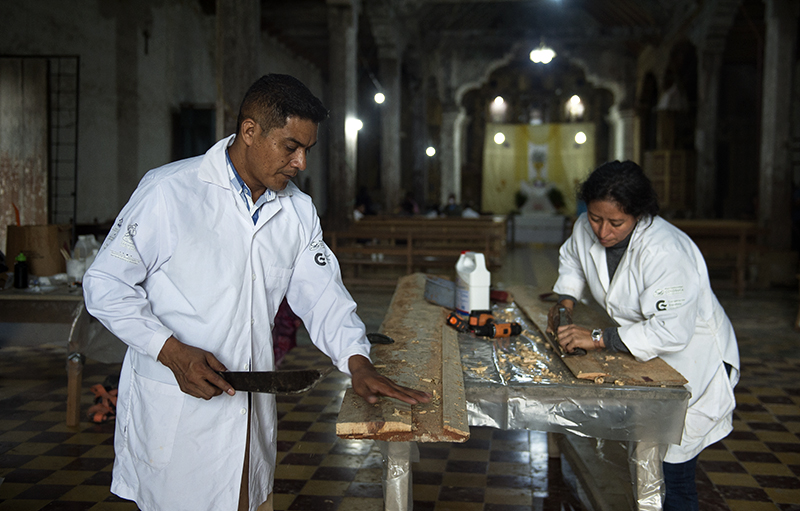
Project to restore the church in San Manuel Colohete, to unlock its value as a driver of local development in the Colosuca Commonwealth, Honduras, Phases I, II and III. Implemented by the Commonwealth of Municipalities in the Centre of Colosuca Lempira, Honduras. Photo: © Miguel Lizana / AECID.
Spain and humanitarian diplomacy
Through its humanitarian diplomacy action, Spain contributes to the protection of civilian populations in armed conflicts and other situations involving violence. Spain is working at the diplomatic level to improve the framework conditions for humanitarian efforts.
Spain promotes compliance with international humanitarian law and contributes to the development of instruments to strengthen protection of civilians. To this end, it maintains ongoing dialogues with other States, international organizations, and non-governmental organizations.
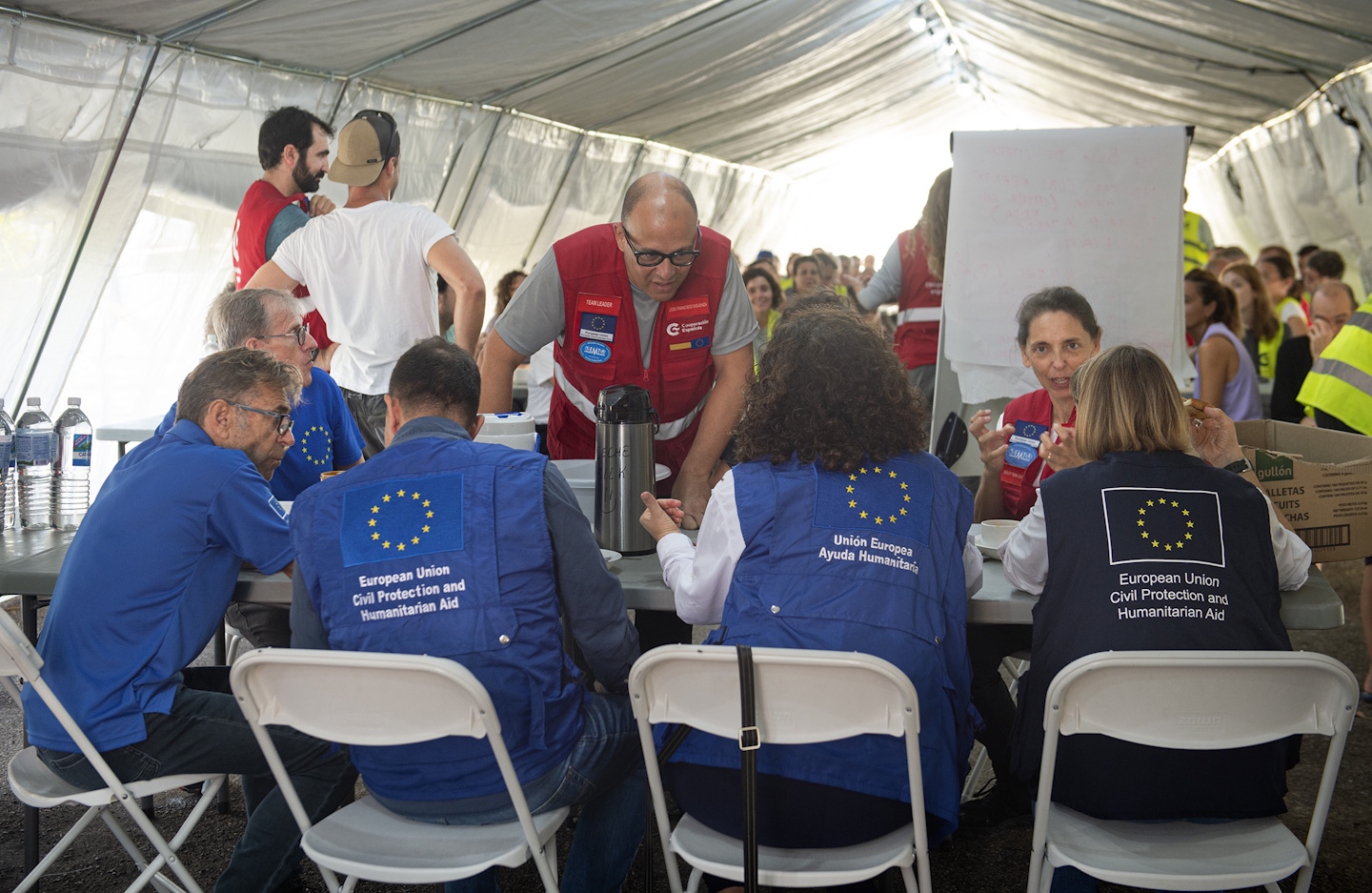
Working meeting between the EU team and the Humanitarian Assistance Office as part of the humanitarian mission in response to Hurricane Melissa in Jamaica. Photo: © Miguel Lizana / AECID.
Humanitarian Diplomacy Strategy of Spain 2023-2026
In January 2023, Spain adopted its first Humanitarian Diplomacy Strategy[GHR1] , covering the period from 2023 to 2026. The Strategy was conceived as a tool with which to give greater priority to the humanitarian perspective in the State's foreign action. It seeks to foster the use of all instruments against humanitarian crises, safeguarding humanitarian space and defending neutral, impartial and independent humanitarian action.
Spain's Humanitarian Diplomacy Strategy is a response to an international context with growing humanitarian needs. It complements other strategies, in particular, Spanish Cooperation's Humanitarian Action Strategy 2019-2026.
Having been prepared by means of an inclusive process, the Strategy is the product of a collaboration involving multiple public administrations and members of civil society.
The Strategy sets out three major goals, corresponding in turn to 14 lines of action:
- Goal 1: Prevent and resolve conflicts, corresponding to five lines of action encompassing preventive diplomacy, protecting humanitarian space, and counter-terrorism.
- Goal 2: Promote respect for international humanitarian law, corresponding to five lines of action encompassing accountability and combating impunity, protecting medical missions, children in armed conflicts, and hunger and conflict.
- Goal 3: Protect persons in situations of vulnerability, leaving no one behind, corresponding to four lines of action encompassing combating sexual violence, and assisting refugees and internally displaced persons.
Protection of civilians
International law requires all parties to an armed conflict to protect civilians and non-combatants and imposes restrictions and prohibitions on the methods and means of warfare. The protection of civilians in armed conflicts is a principal aim of Spanish foreign policy. Spain is working to guarantee compliance with international humanitarian law and human rights law in armed conflicts. Its priorities are:
- Promote compliance with international humanitarian law by all parties to an armed conflict, including non-State armed groups.
- Specific actions to assist the civilian population, such as protecting children in conflict, combating sexual violence in conflict, and protecting medical missions.
- Promote protection of victims, and accountability for violations of international humanitarian law.
Protecting medical missions
Providing medical care to the wounded and sick in conflict situations is one of the essential principles of international humanitarian law. Within the United Nations, Spain co-led the adoption of Security Council resolution 2286 (2016), the tenth anniversary of which falls in 2026. The resolution condemns acts of violence, attacks and threats against medical personnel and hospitals in armed conflicts, demands that States comply with relevant obligations under international humanitarian law, including that of facilitating unimpeded passage of medical personnel and medical equipment to civilian populations in conflict situations, and strongly urges States and all parties to armed conflicts to investigate violations of international humanitarian law and take action against those responsible.
During the 34th International Conference of the Red Cross and Red Crescent (2024), Spain and the Spanish Red Cross presented the joint open pledge “Health Care in Danger: Protecting the Medical Mission". Spain co-chairs the Protection of Hospitals workstream of the global initiative to reactivate political commitment to International Humanitarian Law (the Global IHL Initiative). Co-launched by the International Committee of the Red Cross (ICRC), this Initiative seeks to strengthen respect for and application of international humanitarian law in armed conflicts, to address current challenges, to promote universal respect for the provisions of international humanitarian law and develop practical recommendations regarding its effective application.
Voluntary report on domestic implementation of international humanitarian law
As part of its Humanitarian Diplomacy Strategy, Spain has published its first voluntary report on domestic implementation of international humanitarian law. This report offers an overview of the application of international humanitarian law in Spain, through an analysis of the legislative framework, policies and strategies rolled out since the approval of the country's Humanitarian Diplomacy Strategy.
Read full report
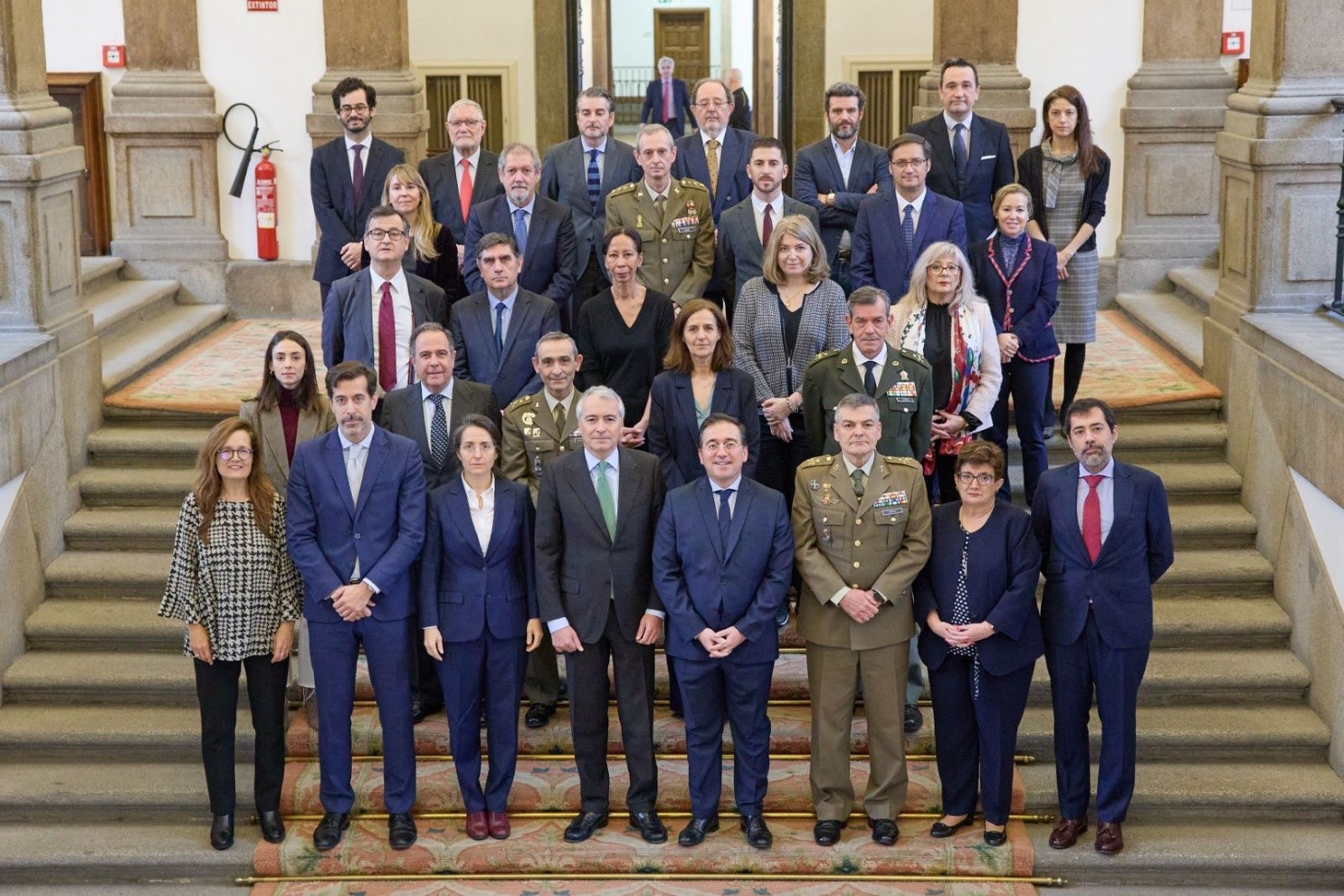
Sixth meeting of the Spanish Committee on International Humanitarian Law, 15 February 2024
Humanitarian action
What is humanitarian action?
The purpose of humanitarian action is to protect and save lives, to prevent and alleviate human suffering, to meet people's most basic and immediate needs, and to promote human rights, applying an approach aimed both at capacity-building and at reducing vulnerabilities.
Spanish Cooperation's commitment to humanitarian action
In that respect, Spanish Cooperation's Sixth Master Plan for Sustainable Development and Global Solidarity[GHR1] , covering the period from 2024 to 2027, with its theme of leaving no one behind, addresses the paradigm shift referred to in the Agenda for Humanity adopted following the World Humanitarian Summit in 2016 and the Grand Bargain[GHR2] from that same year, by aiming to improve the effectiveness and quality of humanitarian action, strengthening flexibility, localization and accountability to affected populations. Furthermore, the Spanish Cooperation Humanitarian Action Strategy (2019-2026)[GHR3] , which follows a multilateral, pro-European approach, was adopted in March 2019. The Strategy strengthens humanitarian diplomacy as a vital component of foreign action and mainstreams gender and attention to people in the most vulnerable situations.
The approach is further strengthened by the first Humanitarian Diplomacy Strategy, which covers the period from 2023 to 2026, envisioning humanitarian diplomacy as the use of political and diplomatic instruments to promote respect for international humanitarian law.
The Sixth Master Plan also emphasizes the role of Spanish humanitarian action in providing support during protracted crises and in responding rapidly to emergencies, thus responding to natural disasters and prioritizing the countries and settings where Spain can offer the greatest added value, without this precluding humanitarian action in other geographical settings that are defined as priorities in the Plan, if necessitated by the humanitarian needs identified.
These emergency-related humanitarian responses also include prevention, disaster preparedness and early recovery actions, thus bolstering the risk-based approach to humanitarian action and contributing to reducing the impact of unforeseen crises.
Humanitarian Action Directorate of the Spanish Agency for International Development Cooperation: coordination and leadership
The Humanitarian Action Directorate of the Spanish Agency for International Development Cooperation (AECID)[GHR1] is responsible for coordinating and leading Spain's humanitarian action. As a body attached to the Ministry of Foreign Affairs, European Union and Cooperation, it oversees the management and provision of assistance in humanitarian crises and represents Spain in international and regional humanitarian forums. The Directorate was previously the Humanitarian Action Office, which was established in 2007 and was converted into a Directorate when the new Statute for AECID was approved in 2024.
Impact of AECID's humanitarian action: millions of beneficiaries and resources invested
Since its creation, AECID has managed more than a billion euros and has assisted more than three million people affected by humanitarian crises, including conflicts and natural disasters, in Syria and Lebanon, the Sahel and Lake Chad regions, Ukraine, Sahrawi refugee camps, the Occupied Palestinian Territories and Latin America and the Caribbean, among other places.
Effective responses to humanitarian crises through emergency management
AECID responds to emergencies in close collaboration with multiple stakeholders. That can entail, for example, managing emergency response funds alongside international organizations such as the Office for the Coordination of Humanitarian Affairs (OCHA) or the World Health Organization (WHO), signing emergency response agreements with different Spanish non-governmental organizations (NGOs), or awarding different grants.
AECID also has outposts (in Panama, Jerusalem, Amman, Algiers/Tindouf, Addis Ababa, Bamako and Niamey), and three logistics centres to maximize its response capacity:
- Humanitarian Logistics Centre in Torrejón de Ardoz (Madrid), with the capacity to respond to multiple crises simultaneously
- United Nations Humanitarian Response Depot (UNHRD) in Panama, housing prepositioned emergency supplies
- United Nations World Food Programme (WFP) humanitarian logistics base in Las Palmas de Gran Canaria
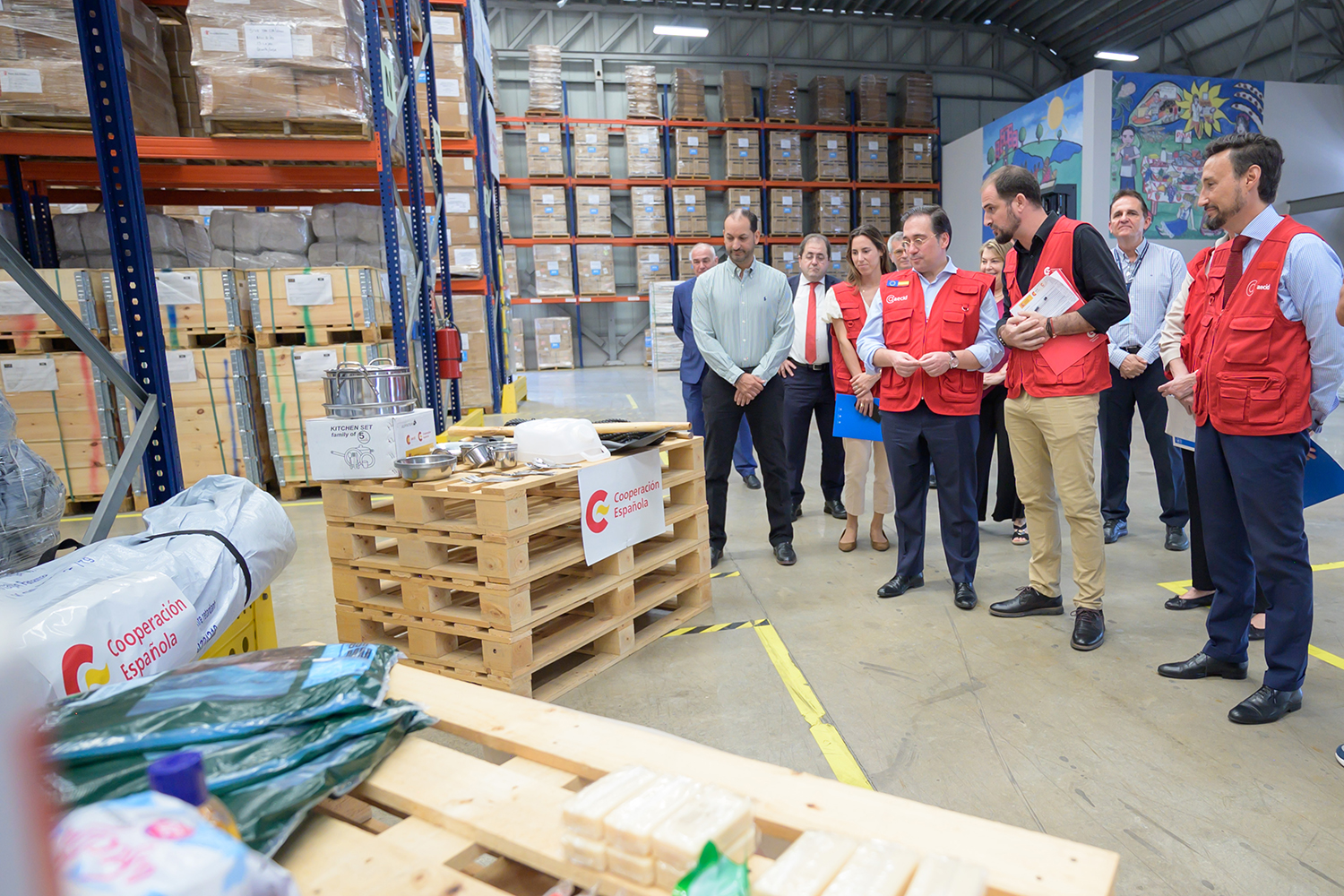
The Minister for Foreign Affairs, European Union and Cooperation during his visit to the United Nations Humanitarian Response Depot in Panama, in March 2024.
Spanish Technical Aid Response Team (the “red vests”): a multidisciplinary immediate response team
In 2018, the Humanitarian Action Office (now the Humanitarian Action Directorate) recognized the first level 2 Emergency Medical Team (EMT) in Spain. That team, comprising volunteers from the National Health System, NGOs and local and regional institutions, laid the groundwork for what is now known as the Spanish Technical Aid Response Team (START) or “red vests”. The purpose of the team is to contribute to improving the emergency responses of Spain's humanitarian action, which currently relate to health, water and sanitation and other specialized areas.
START works closely with the WHO EMT Initiative and several of its response modules are included in the capacity pool of the European Union Civil Protection Mechanism. In April 2019, the red vests were deployed for the first time, to Dondo (Mozambique) in response to the emergency caused by Cyclone Idai. The team has also been deployed in countries such as Haiti, Jamaica, Türkiye and Equatorial Guinea and its most recent mission saw it return to Mozambique, where the drinking water treatment module was deployed in response to the floods in early 2026.
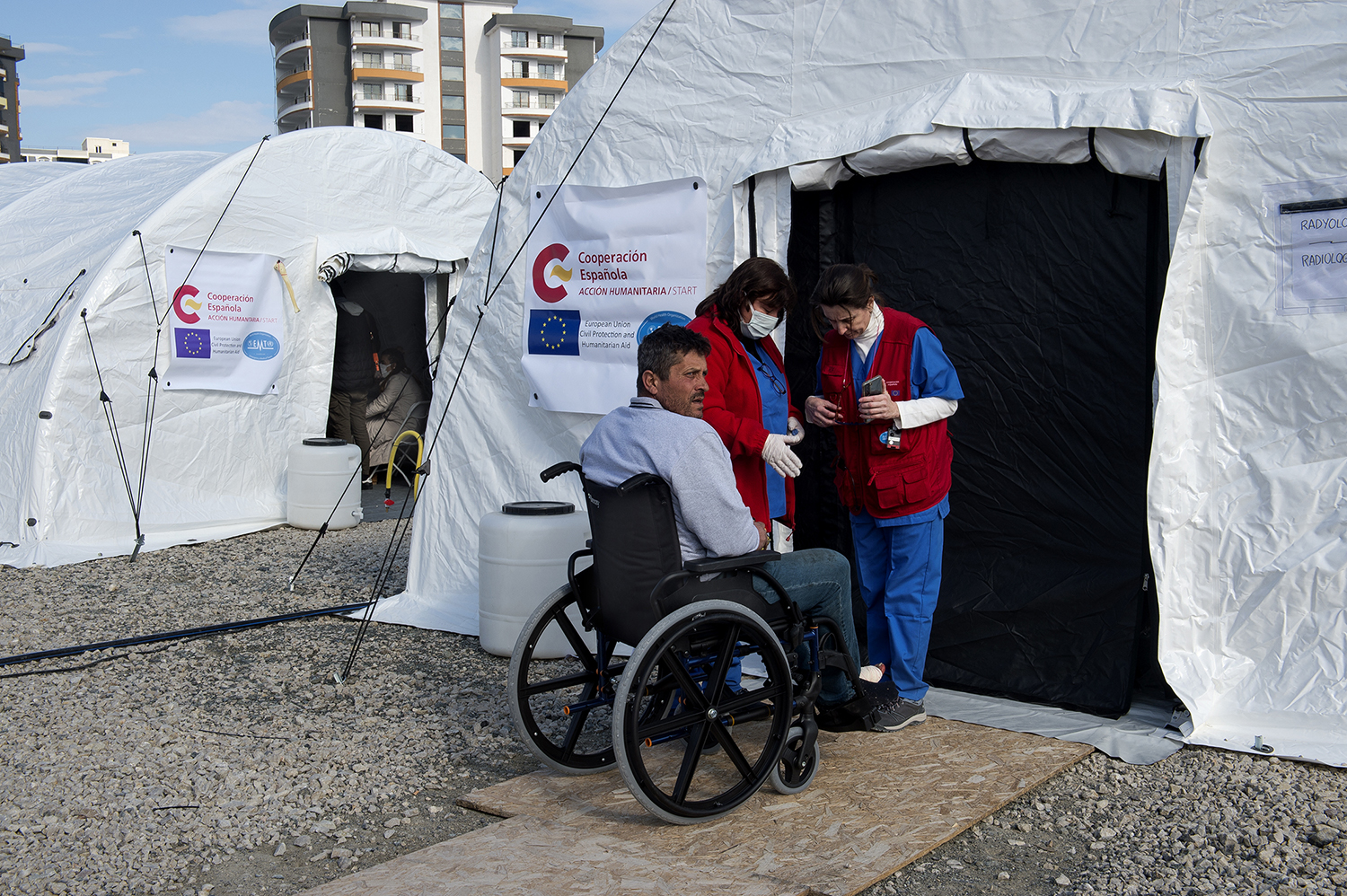
START members deployed to Hatay Province, Türkiye, to attend to those affected by the earthquake in February 2023.
Spain in International Humanitarian Forums: ongoing support and commitment
Over recent years, Spain has further demonstrated its commitment to humanitarian action and diplomacy, and has strengthened its position as a humanitarian donor. For instance, the country re-joined the ICRC Donor Support Group, which it co-chaired from July 2023 to July 2024, and was part of the Executive Board of WFP until 2024. Since 2025, Spain has also been participating alongside Spanish Red Cross in the Donor Advisory Group (DAG) of the International Federation of Red Cross and Red Crescent Societies (IFRC), and in 2026 it has co-chaired DAG.
That commitment has been accompanied by stronger political and financial support for key multilateral stakeholders and instruments, such as OCHA—the United Nations’ main humanitarian agency—the Central Emergency Response Fund (CERF), OCHA country-level humanitarian funds, and the IFRC Disaster Relief Emergency Fund (DREF).
In that regard, Spain chaired the OCHA Donor Support Group (ODSG) from July 2019 to June 2020 and the Council Working Party on Humanitarian Action and Food Aid (COHAFA) during the Spanish Presidency of the Council of the European Union in 2023, and remains very active in both forums.
Conclusion: the importance of humanitarian action in Spanish diplomacy
Humanitarian action is a crucial aspect of Spanish diplomacy, reflecting a firm commitment to international cooperation, to reducing global vulnerability and to supporting people all over the world affected by crises and conflicts.